

MileValue is part of an affiliate sales network and receives compensation for sending traffic to partner sites, such as CreditCards.com. This site may earn compensation when a customer clicks on a link, when an application is approved, or when an account is opened. This compensation may impact how and where links appear on this site. This site does not include all financial companies or all available financial offers. Terms apply to American Express benefits and offers. Enrollment may be required for select American Express benefits and offers. Visit americanexpress.com to learn more. All values of Membership Rewards are assigned based on the assumption, experience and opinions of the MileValue team and represent an estimate and not an actual value of points. Estimated value is not a fixed value and may not be the typical value enjoyed by card members.
Points and miles can turn everyday spending into flights, hotel stays and other travel rewards. However, getting started with earning and redeeming these rewards is much easier when you focus on the fundamentals instead of trying to master every loyalty program at once.
There are three major reward currencies to understand: credit card points, which can often be transferred to multiple travel programs; airline miles, which are generally earned and redeemed within a specific airline loyalty program; and hotel points, which are earned and redeemed within a particular hotel loyalty program.
Flexible credit card currencies can be especially useful because you don’t have to decide immediately which airline or hotel program you’ll eventually use. Programs such as Chase Ultimate Rewards, American Express Membership Rewards and Capital One miles allow eligible cardholders to transfer rewards to participating airline and hotel partners, although the partners and transfer ratios vary.

New to Points and Miles? Start Here
Get Your Finances in Order Before Chasing Points
The most important rule of a points and miles strategy has nothing to do with airline awards: always pay your credit card balances in full and on time. Rewards are rarely worth paying interest for, as interest can quickly diminish the value of rewards earned from spending.
Before applying for rewards cards:
- Pay your existing credit card balances in full whenever possible.
- Set up automatic payments so you don’t accidentally miss a due date.
- Build an emergency fund rather than using points cards to finance purchases you couldn’t otherwise afford.
- Don’t spend more simply because a card earns bonus points.
- Treat a credit card like a debit card: if you don’t have the money in your budget, reconsider the purchase.
- Review your credit reports periodically and monitor your credit score.
- Space out applications for cards rather than applying for multiple cards together without a clear strategy.
- Read the card’s current offer terms before applying, including annual fees, spending requirements and bonus eligibility restrictions.
A good rewards strategy should improve the return on spending you were already going to make. It shouldn’t increase that spending.
Understand the Three Types of Rewards
Transferable Credit Card Points
For many travelers, flexible credit card points are the best foundation for a points strategy. Depending on the card, transferable currencies can include:
- Chase Ultimate Rewards
- American Express Membership Rewards
- Capital One miles
- Other bank rewards programs offering transfers to airline or hotel programs
The major advantage of these currencies is flexibility. Instead of immediately earning miles with one airline, you can keep your rewards with the bank and later transfer them to an eligible loyalty program when you find an award you want to book.
For example, eligible Chase cards can currently transfer Ultimate Rewards points to programs including Air Canada Aeroplan, Air France-KLM Flying Blue, British Airways Club, United MileagePlus, Southwest Rapid Rewards, Marriott Bonvoy, IHG One Rewards, Wyndham Rewards and World of Hyatt. Likewise, Capital One offers numerous airline and hotel partners, with many transfers occurring at a 1:1 ratio. However, transfer ratios can vary, so always verify the current ratio before moving points.
Airline Miles
Airline miles belong to individual frequent-flyer programs. Examples of these programs include:
- United MileagePlus
- Delta SkyMiles
- American Airlines AAdvantage
- Air Canada Aeroplan
- Air France-KLM Flying Blue
- British Airways Club
- Virgin Atlantic Flying Club
You can typically earn miles by flying, using a co-branded airline credit card, transferring eligible credit card points or through other program partners. Airline miles are generally less flexible than bank points because once miles are in an airline program, they usually can’t be transferred back to your bank rewards account.
However, that doesn’t make airline miles less useful. In fact, some of the strongest redemptions can come from learning how individual airline programs price award tickets.
Hotel Points
Hotel loyalty programs work in much the same way as frequent-flyer programs. Major programs include:
- World of Hyatt
- Hilton Honors
- Marriott Bonvoy
- IHG One Rewards
- Wyndham Rewards
- Choice Privileges
Members can generally earn points through paid stays, hotel credit cards, promotions and eligible transfers from bank rewards programs. Hotel programs may also provide elite-status benefits, such as room upgrades, breakfast, late checkout or additional points, depending on the program, hotel, status level and availability.
Apply for Loyalty Programs Now
You don’t need to wait until you’re booking a trip to create loyalty accounts. Joining major airline and hotel loyalty programs is generally free, and creating accounts in advance makes future bookings and points transfers easier.
Consider starting with programs you realistically expect to use, including:
- Airlines serving your home airport
- Airlines you fly regularly
- Programs belonging to major airline alliances
- Hotel chains you already use
- Programs that are transfer partners of your credit card rewards currency
Keep your name consistent across your credit card, airline and hotel accounts, as this can help prevent problems when transferring points. Capital One, for example, states that the name on your Capital One account must match the name associated with the receiving loyalty account.
Pick a First Rewards Credit Card
There’s no universal best first card. Your choice should depend on your spending, travel goals, credit profile and willingness to pay an annual fee.
A few useful starting points to research include:
Capital One Venture Rewards Credit Card
This card often appeals to beginners who prefer a straightforward earning structure. For an annual fee of $95, it currently earns unlimited 2X miles per dollar on everyday purchases, plus 5X miles on eligible hotels, vacation rentals and rental cars booked through Capital One Travel. Miles can be used in various ways, including transferring them to participating loyalty programs.

Capital One Venture Rewards Credit Card
Earn more than $1000 in Travel Bonuses with a limited-time $300 Capital One Travel stays credit, plus earn 75,000 bonus miles once you spend $4,000 on purchases within the first 3 months of account opening—that’s more than $1,000 in travel value
Chase Sapphire Preferred® Card
This card is also worth considering if you want to begin learning about transferable points. Eligible cardholders can transfer Ultimate Rewards points to participating airline and hotel programs, making it possible to graduate from simple travel redemptions to more advanced award bookings.

Chase Sapphire Preferred® Card
Earn 75,000 bonus points after you spend $5,000 on purchases in the first 3 months from account opening.
American Express® Gold Card
If you spend heavily on food, you may want to consider the American Express Gold Card. It currently earns 4X Membership Rewards points at restaurants worldwide on up to $50,000 in purchases per calendar year, then 1X points thereafter. It also earns 4X points at supermarkets in the United States on up to $25,000 in purchases per calendar year, then 1X points thereafter. The annual fee is $325. American Express lists 20 airline and hotel Membership Rewards transfer partners, although transfer ratios differ by program.
Before choosing a premium card, calculate whether you’ll genuinely use its benefits. Rewards only have value if they replace spending you would have made anyway.
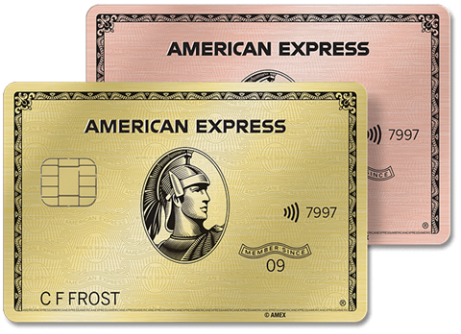
American Express® Gold Card
You may be eligible for as high as 100,000 Membership Rewards® Points after you spend $8,000 in eligible purchases on your new Card in your first 6 months of Card Membership. Welcome offers vary and you may not be eligible for an offer. Apply to know if you’re approved and find out your exact welcome offer amount – all with no credit score impact. If you’re approved and choose to accept the Card, your score may be impacted.
Terms apply. Rates & Fees.
Learn Why Welcome Bonuses Matter
A credit card welcome bonus can account for a large portion of the points you’ll earn during your first year, but don’t let a large advertised number of points determine your decision on its own.
Also consider the following factors:
- How much spending is required
- How long you have to meet that spending requirement
- Whether the spending requirement fits your normal budget
- The annual fee
- The card’s long-term earning categories
- Whether the points can be transferred
- Whether you can realistically use the card’s benefits
Never spend unnecessarily to earn a welcome bonus. A $4,000 spending requirement isn’t a bargain if it causes you to make $1,000 of purchases you wouldn’t otherwise have made.
Start With a Travel Goal
One common mistake beginners often make is collecting points without knowing what they’re for. Instead, start with a rough goal, such as:
- Two round-trip domestic tickets
- A family trip during school vacation
- A long weekend at a hotel
- Economy flights to Europe
- Business-class seats for an anniversary
- Several nights at a resort
You don’t need exact dates right away. You simply need enough direction to determine which currencies could be useful.
Don’t Transfer Points Speculatively
This is one of the most important concepts to learn. Transferable points are valuable partly because they’re flexible. Once you transfer them to an airline or hotel, that flexibility generally disappears.
American Express specifically recommends checking award availability and determining how many points are required before transferring Membership Rewards points because transfers are final. Chase similarly states that transfers to its travel partners can’t be reversed.
A simple rule to follow is to find the award first, then transfer the points and then book immediately afterward whenever possible.

Already Started? What’s Next?
Once you’ve earned your first meaningful stash of points, the next step is learning how to turn those rewards into travel. This is where points and miles become substantially more interesting—and where understanding award pricing, transfer partners and redemption value can make a major difference.
Your first redemption doesn’t need to be an elaborate international business-class itinerary. Start with a trip you actually want to take, compare the cash price with the points price and work backward.
For example, if a flight costs $500 or 25,000 miles plus $5.60 in taxes, you’d be getting a redemption value of just under 2 cents per mile: ($500 − $5.60) ÷ 25,000. This calculation doesn’t automatically make the redemption good or bad, but calculating value gives you a consistent way to compare your options. Remember that an award ticket may earn fewer or no redeemable miles compared with a paid ticket, cancellation rules can differ and taxes or carrier-imposed surcharges can materially change the economics of an award.
Learn How Transfer Partners Work
Transfer partners are where flexible rewards become especially powerful. Instead of being restricted to the bank’s travel portal, eligible cardholders can transfer points to participating airline or hotel programs and redeem them according to that program’s rules.
For example:
Credit card points → airline program → award flight
or:
Credit card points → hotel program → award night
The airline operating your flight doesn’t necessarily have to be the airline whose miles you use. Airline partnerships and alliances can sometimes allow you to redeem miles from one program for a flight operated by another airline. This is why understanding transfer partners matters more than memorizing dozens of award charts.
Search Before You Transfer
Your first transfer-and-book redemption should follow a simple process:
- Decide where you want to go.
- Search your preferred dates using cash prices.
- Search the airline or hotel program for award availability.
- Explore alternative loyalty programs that might be able to book the same flight.
- Compare the required points, taxes and fees.
- Confirm that your credit card currency transfers to the program you want.
- Check the current transfer ratio.
- Verify that the traveler names and loyalty account information are correct.
- Transfer only the amount you need.
- Wait for the points to arrive.
- Complete the reservation.
Transfers aren’t always instantaneous. Chase, for example, says most transfers are processed by the next business day but can take up to seven business days. Award availability can disappear while you’re waiting, so always research expected transfer times before initiating a transfer.
Understand That 50,000 Points Doesn’t Always Equal 50,000 Points
Point balances from different programs shouldn’t be compared purely by their size.
For example:
- 50,000 airline miles may buy a particular flight, but another airline could charge 80,000 miles for that same trip.
- A hotel program might charge 40,000 points per night, while another hotel program might charge 20,000.
- A bank program might require a different number of points if you book through its travel portal.
Transfer ratios can also differ. American Express, for example, currently lists transfers to Hilton Honors at a 1:2 ratio, while transfers to Marriott Bonvoy are 1:1. That doesn’t mean Hilton points are automatically half as valuable or that either transfer is necessarily a good redemption, as each program prices awards differently. Therefore, focus on what your points can buy, not simply how many points you have.
Learn the Difference Between a Travel Portal and a Points Transfer
These are two different ways to use flexible rewards.
Booking Through a Travel Portal
With this option, you use your bank’s rewards directly for travel booked through its platform.
This can be useful when:
- Cash fares are inexpensive.
- Award availability is poor.
- You want a straightforward booking process.
- Transferring points wouldn’t provide good value.
Transferring to a Loyalty Program
With this method, you convert your flexible points into airline miles or hotel points and book directly through that program.
This can be useful when:
- An airline has attractive award availability.
- Cash prices are high.
- You find a valuable premium-cabin redemption.
- A hotel redemption offers strong value.
- A transfer bonus improves the value you get.
Neither method is automatically better, so it’s important to compare both options before deciding which one’s right for you.
Get Comfortable Searching Flexible Dates
Flexibility can be one of the most valuable tools in points and miles travel.
If possible, search:
- One or two days before and after your ideal departure
- Nearby airports
- Different return dates
- One-way tickets
- Different airlines
- Partner loyalty programs
Award prices and availability can vary significantly from one day to another, so instead of asking, “How do I use my points for this exact flight?” ask, “What are the best award options for getting to this destination around these dates?” This small change in approach opens considerably more possibilities.
Learn the Basics of Airline Alliances and Partnerships
You don’t need to memorize every alliance on day one, but eventually you’ll want to understand the three major global airline alliances:
- Star Alliance
- Oneworld
- SkyTeam
Additionally, airlines may also maintain partnerships outside these alliances. The key takeaway is simple: the miles you redeem don’t necessarily need to come from the airline operating the flight. This concept can help you find more award options.
Add Cards Slowly and With Purpose
After successfully managing your first card, you can begin building a more complete strategy. Future cards might serve different purposes, such as:
- A card for dining
- A card for groceries
- A card for travel
- A card earning a strong return on everyday purchases
- An airline card providing useful airline-specific perks
- A hotel card offering an annual free-night benefit or elite-status advantages
- A business card for eligible business expenses
The objective isn’t to own the most cards but to build a combination of cards that earns useful rewards from your regular spending while providing benefits that are worth more to you than their costs.
Don’t Ignore Ways to Earn Points Beyond Credit Cards
Credit cards aren’t the only way to build your rewards balance. Depending on the loyalty program, opportunities for earning points can include:
- Airline shopping portals
- Airline dining programs
- Hotel stays
- Paid flights
- Limited-time loyalty promotions
- Referral bonuses
- Bank shopping offers
- Partner promotions
Some reward ecosystems extend well beyond conventional credit card purchases. Bilt, for example, has expanded its offerings beyond rent rewards and introduced a homebuying program in which eligible members working with an eXp Realty agent could earn one Bilt Point for every $2 of a home’s purchase price. However, terms and programs change, so always verify current requirements before making a financial or travel decision based on a particular earning opportunity.
Keep Your Strategy Organized
Once you have several cards and loyalty accounts, organization becomes important. Make sure you track the following using a simple spreadsheet:
- Credit card opening dates
- Annual fees
- Renewal dates
- Welcome-bonus spending requirements
- Statement credits and benefits
- Airline mileage balances
- Hotel point balances
- Transferable point balances
- Free-night certificates
- Companion certificates
- Expiration dates
- Elite status
- Upcoming trips
You should also reconsider every annual-fee card when it renews. Ask yourself whether the benefits you’re actually using justify keeping the card for another year.
Avoid Common Points and Miles Mistakes
Beginners can avoid most pitfalls by remembering a few simple rules:
- Don’t carry credit card debt for the sake of rewards.
- Don’t apply for a card solely because of a large welcome bonus.
- Don’t overspend to earn points.
- Don’t transfer flexible points without a plan.
- Don’t assume every transfer partner offers equal value.
- Don’t assume booking with points is always better than paying cash.
- Don’t overlook taxes and fees on award tickets.
- Don’t hoard points indefinitely.
- Don’t close a card impulsively without considering the potential effects on your credit and rewards.
- Don’t build a complicated strategy you can’t comfortably manage.
Our Take
The best way to get started with points and miles is to keep your strategy deliberately simple. A great starting point is to have one useful transferable-points card, free memberships in the airline and hotel programs you’re most likely to use and one specific travel goal. Learn how that single rewards ecosystem works before adding another. Your first redemption doesn’t need to produce an extraordinary cents-per-point calculation; successfully finding an award, transferring points and booking a trip teaches you more than months spent reading about hypothetical redemptions.
Once you’ve mastered that process, add complexity only when it solves a real problem. A second card should improve your earning rates, unlock useful transfer partners or provide benefits you’ll genuinely use, not simply increase the number of cards in your wallet. Your long-term goal shouldn’t be to accumulate the largest points balance possible. Instead, earn points with a purpose and redeem them for travel you value. Loyalty programs can change transfer ratios, award prices, partners and redemption rules, making transferable currencies especially useful, but even flexible points shouldn’t become an end goal in themselves.
Build your balances around trips you can realistically take, compare cash and award prices before booking and use the combination that makes sense for each trip. If you do this consistently, pay off every card in full and keep your strategy manageable, your points and miles become what they should be: a practical tool for reducing travel costs and making more ambitious trips achievable.